This CPD-certified Modern Slavery Training course helps to ensure we are able to do our duty to identify and prevent those suffering from this terrible crime.
The course provides essential awareness of the main types of modern slavery present in today’s workplaces and supply chains and presents case studies to show where and how they occur in the UK. By the end of this course, users will be equipped to notice signs of modern slavery and take appropriate next steps to help protect victims and their organisation.
This course is certified by the Continuing Professional Development (CPD) Certification Service.
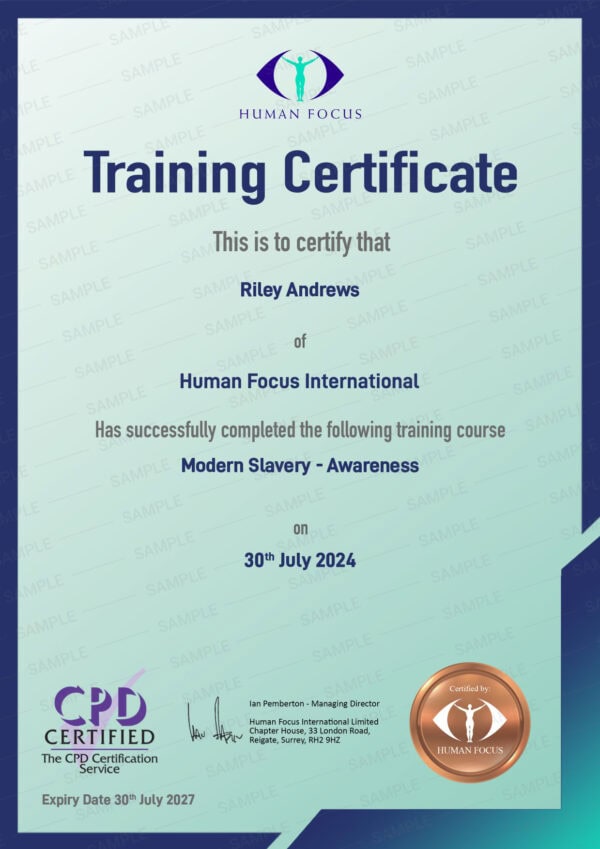
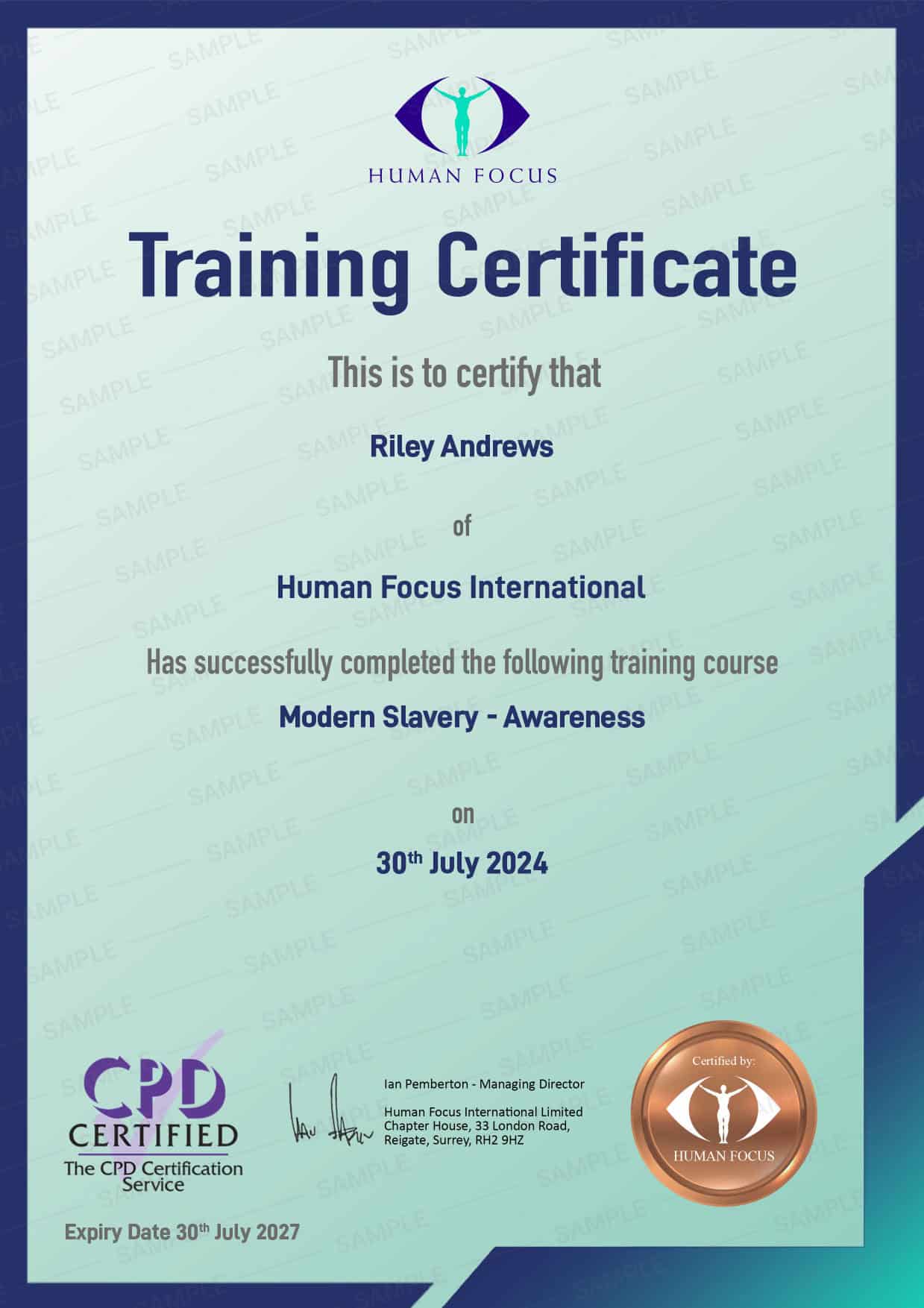
The course certificate includes:
User name
Company name
Course name
Completion date
Expiry date
Approval body
A CPD-certified modern slavery awareness training certificate will be available for download and printing instantly upon course completion.
Users must complete an assessment before earning their certificate.
The end-of-course test is:
Fully online
Multiple choice
A score of 80% is required to pass.
Customer Feedback
Why Is Modern Slavery Training Important?
There is no one face to modern slavery. The victims of modern slavery can be our colleagues, contractors brought in for temporary work, our neighbours or someone we meet on the street.
We may not realise that they are victims. And they may not know how to ask for help or feel unable to do so. Victims may even seem to have some freedom, but ultimately are controlled and exploited through fear and threats.
Employers have legal duties to prevent modern slavery in their business and supply chains. To meet these duties, staff need clear knowledge of what modern slavery is and how it appears in real situations. Training helps people challenge false assumptions, notice warning signs and act when something looks wrong.
Are You Aware of Your Responsibilities?
Under the Modern Slavery Act 2015, employers must ensure their business and supply chains do not use slavery, forced labour or human trafficking.
Section 54 of the Act requires any organisation that carries on business in the UK, supplies goods or services and has a total annual turnover of £36 million or more to publish an annual modern slavery statement. Government guidance on the annual modern slavery statement recommends that it should explain the organisation’s structure and supply chains, its policies on slavery and human trafficking, the due diligence checks it carries out, how it assesses and manages risk, how it measures if its actions are working and the training it provides to staff.
About Modern Slavery Training
Modern slavery in workplaces and supply chains often goes unnoticed because victims are disguised as legitimate workers. The House of Lords Select Committee on the Modern Slavery Act estimates that there are around 130,000 people living in modern slavery in the UK today. They can be found in almost every sector and every area of the country.
This online Modern Slavery Training course provides trainees with a clearer understanding of modern slavery and human trafficking risk in the UK. They will know what modern slavery looks like, how to spot it and what action to take if they do.
Frequently Asked Questions
Modern slavery training raises awareness of how slavery occurs in the modern day, the laws that apply and how to recognise and report it. It covers different forms of modern slavery, including human trafficking, forced labour, domestic servitude and sexual exploitation.
Our course is designed to help individuals and organisations identify signs of abuse, understand their responsibilities and take appropriate action.
The Modern Slavery Act 2015 is the main piece of legislation against modern slavery in the UK. While training is not legally required for all staff, the Act encourages businesses to ensure employees understand the risks and reporting procedures.
Training is also essential for demonstrating due diligence and promoting ethical standards in procurement and employment practices.
Human trafficking – Moving or controlling people to exploit them
Forced labour – Making people work under threat, pressure or deception
Sexual exploitation – Coercing people into sex work or pornography
Domestic servitude – Exploiting people in private homes with little freedom
Criminal exploitation – Forcing individuals to carry out illegal acts, such as theft, fraud or drug trafficking
Slavery typically refers to the historical practice of owning people as property. Modern slavery refers to exploitative practices where people are controlled through coercion, deception or threats. Victims may appear free, but they’re often trapped in cycles of abuse, debt or fear, with no real means of escape.
This training course is suitable for anyone whose role may bring them into contact with potential victims or who has responsibilities in compliance, procurement or safeguarding.
Some roles that may benefit from this course include:
Frontline workers
HR professionals
Social workers
Healthcare staff
Supply chain managers
Compliance and legal advisors
Yes. This training course is fully online and can be accessed on any device.
The course is priced at £25 + VAT for a single trainee. Discounted rates are available for bulk purchases. Click on ‘Discount’ below the ‘Buy Now’ button for more details.
Yes. This course is certified by the Continuing Professional Development (CPD) Certification Service.