PPDS (prepacked for direct sale) food is prepared and packaged before being put on sale to customers. By law, every PPDS food item must be sold with a full ingredients list that highlights the 14 named allergens.
This requirement, known as Natasha’s Law, has been in force since October 2021. Yet not all food businesses are compliant. A regional Trading Standards survey found that 56 out of 100 food businesses were not providing full ingredient lists for food pre-packed for direct sale.
The issue may be awareness. What counts as PPDS food? And what must a compliant label include? This guide answers those questions. It explains how to comply with Natasha’s Law and ensure every PPDS food item you sell is correctly labelled.
Key Takeaways
- PPDS (prepacked for direct sale) food is packaged before a customer orders it and sold by the same business.
- Natasha’s Law requires that every PPDS item display a full ingredients list, with the 14 allergens clearly highlighted.
- Cafés, bakeries, sandwich shops, food stalls, school kitchens, hospital canteens, and supermarkets are most affected, as they commonly prepare and package food on-site for direct sale.
- Failure to comply puts customers at serious risk and can result in enforcement action.
What Is PPDS Food?
PPDS stands for “prepacked for direct sale”. It refers to food that is made and packaged before being put on sale to customers, typically all in one location.

Whether an item is classed as PPDS depends on three factors:
1. How Food Is Packaged
The food must be in packaging that cannot be altered without opening it. Packaging can be partly open or fully enclosed, but it must protect the food once labelled.
2. When Food Is Packaged
PPDS food is packaged before the customer chooses it. If food is packaged after selection, such as a hot sausage roll wrapped at the counter, it’s not PPDS.
3. If Food Is Packaged and Sold by the Same Business
PPDS food is packed and sold by the same business, usually on the same premises. The exception is food packed on one site before being sold at a temporary outlet, such as a market stall. In this scenario, the food will still count as PPDS because it was packaged before being made available for purchase.
Food Hygiene Courses
Equip food workers with essential training for their role. Our online food hygiene courses provide an understanding of food safety, HACCP systems and cross-contamination. All courses award independently recognised certificates for proof of training.
Examples of PPDS Food
For context, here are some everyday examples that fall within the definition of PPDS:
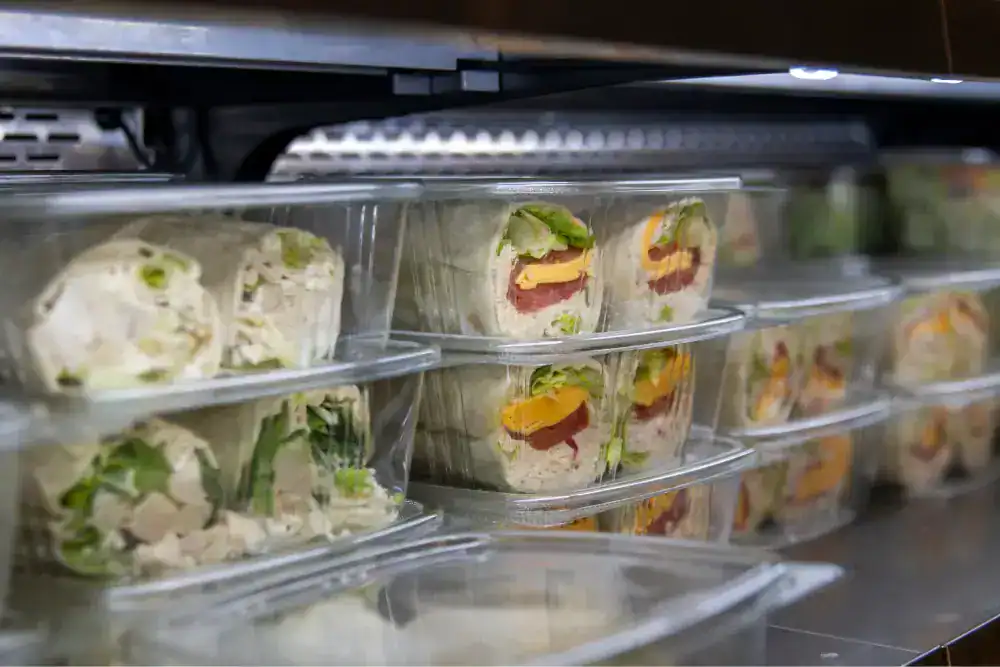
- Sandwiches and wraps prepared and wrapped before being placed on display.
- Salad boxes and pasta pots assembled and packaged for customers to grab and go.
- Bakery products such as sausage rolls, pasties or cakes that are baked and individually wrapped before being put out for sale.
- Deli portions like olives or antipasti that are measured and packaged into takeaway tubs.
- Meat and fish that have been marinated, portioned and packaged by the same business for sale at the counter.
- Hot food-to-go such as soup or stew ladled into takeaway containers and sealed before being offered for sale.
What Doesn’t Count as PPDS
A food item is not PPDS if it is:
- Sold loose – for example, pastries served from a tray or slices of cake wrapped after the customer orders.
- Made to order – such as takeaway meals or sandwiches prepared and packed only after an order is placed.
- Sold online or for delivery – in which case allergen information must still be provided before purchase and at delivery, but not via a PPDS label.
What Are the Rules on Allergen Labelling for PPDS?
Under Article 9(1)(c) of the Food Information to Consumers Regulation (FIC), you must declare the presence of any of the 14 named allergens whenever they are used as ingredients.
The 14 named allergens are:
- Celery
- Cereals containing gluten
- Crustaceans
- Eggs
- Fish
- Lupin
- Milk
- Molluscs
- Mustard
- Peanuts
- Sesame
- Soybeans
- Sulphur dioxide and sulphites
- Tree nuts
These allergens must be clearly identified whenever they appear in your ingredients. To comply, your PPDS labels must:
- Clearly list all ingredients
- Highlight allergens wherever they appear in the ingredients list
- Be easy to read, durable, and not obscured by images or other text
- Be accurate at the point of sale
The law requires this information to be presented in a way customers can trust. Labels must be prominent, legible and placed so nothing interferes with their visibility. They must also withstand handling throughout the sales process.

Why Accurate Allergen Labelling Matters
In 2016, fifteen-year-old Natasha Ednan-Laperouse died after eating a prepacked baguette that contained undeclared sesame. Her death exposed a dangerous gap in allergen labelling and led to the creation of Natasha’s Law.
Natasha’s Law requires clear and consistent ingredient labelling on all PPDS foods so that customers with allergies can choose what they eat with peace of mind.
Food allergies affect around 2.4 million people in the UK. For them, even trace amounts of an allergen can cause severe or life-threatening reactions. Natasha’s Law exists to prevent further tragedies and protect those most at risk.
Because the risks are so serious, your business faces enforcement action and financial penalties if you fail to follow PPDS labelling rules.
That’s why it is essential to take a step back and review how you operate. Ask yourself:
- What products do you sell?
- When and where are they packed?
- Do your labels fully meet the legal requirements?
Do Your Staff Need Training on PPDS Allergen Labelling?
By law, all food workers must receive appropriate training on allergen safety.
Our online Food Allergen Training is designed to meet this requirement. It gives your team the essential knowledge they need to handle allergens safely and verify labels are correct.
The course covers:
- The 14 named food allergens and where they’re most often found
- Legal requirements and labelling guidelines
- Food safety management and hygiene practices that prevent cross-contact
The course is suitable for anyone who prepares, handles or serves food. Train your team today and help ensure every customer is safe and your business is compliant.