Pressure Systems Training

Pressure Systems Training

schedule

Course Duration: 25+ minutes

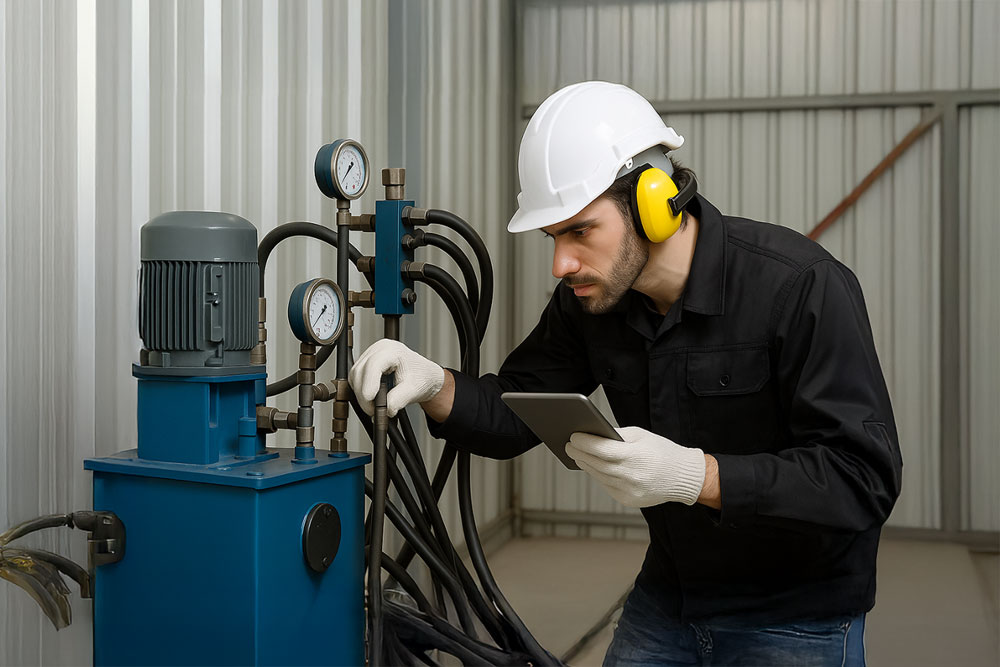
This IIRSM-approved course supports the safe operation of pressurised equipment and compliance with the Pressure Systems Safety Regulations 2000 (PSSR).

It introduces pressure system types, associated hazards and safe working practices. The course also covers regulatory requirements and frontline responsibilities to maintain the safety of pressurised systems. Trainees gain a practical understanding of how pressure systems operate, critical risk factors and key actions to prevent accidents and ensure compliance with PSSR.

live_tv
100% online training
volume_up
Full audio voiceover
repeat_on
Fully online assessment
account_balance_wallet
Discounts when you buy in bulk
important_devices
Access on any device
app_shortcut
App available for iOS & Android
Training You Can Trust

Approved by IIRSM

In line with UK legislation

Certificate on completion

Developed by health and safety professionals

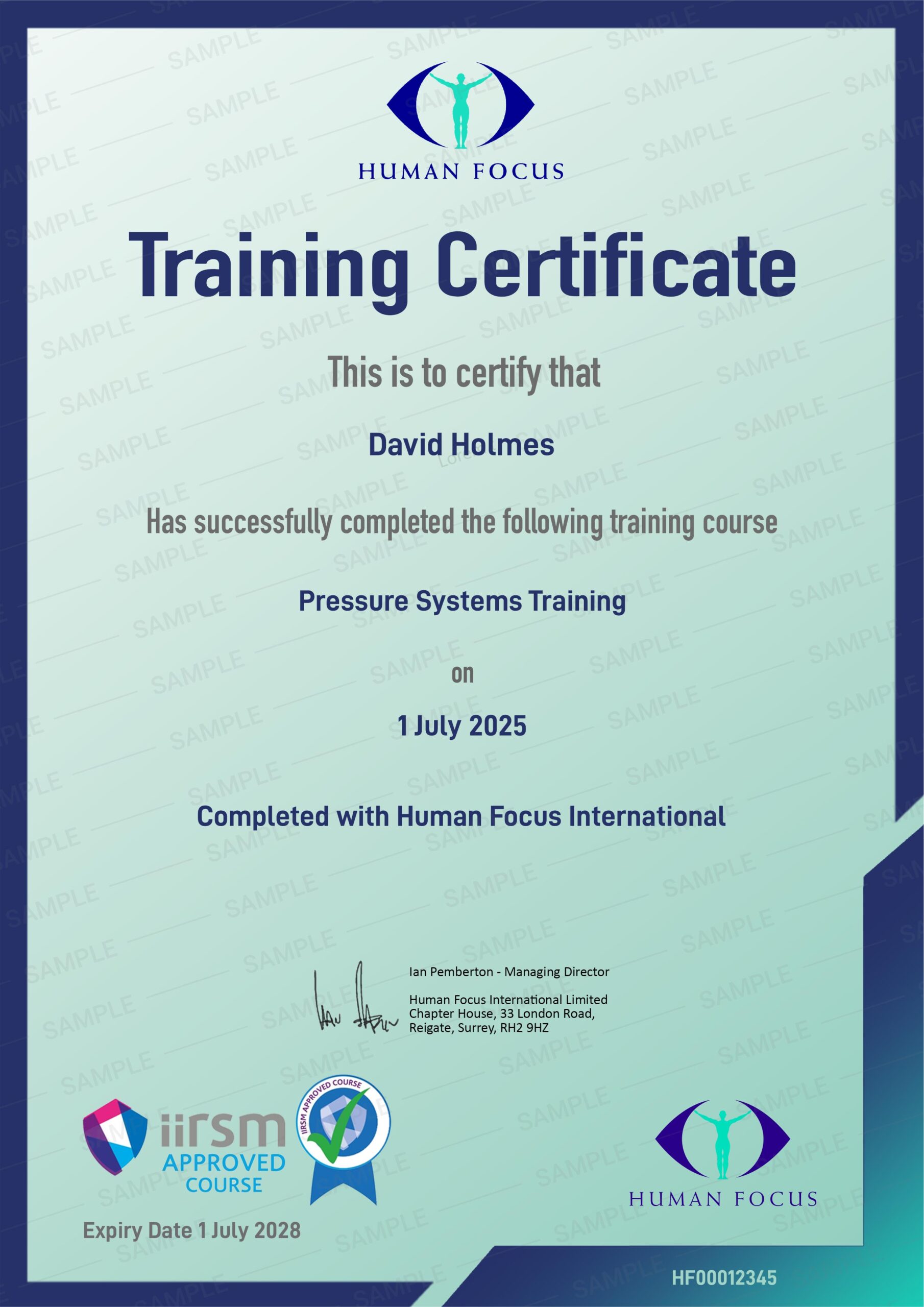
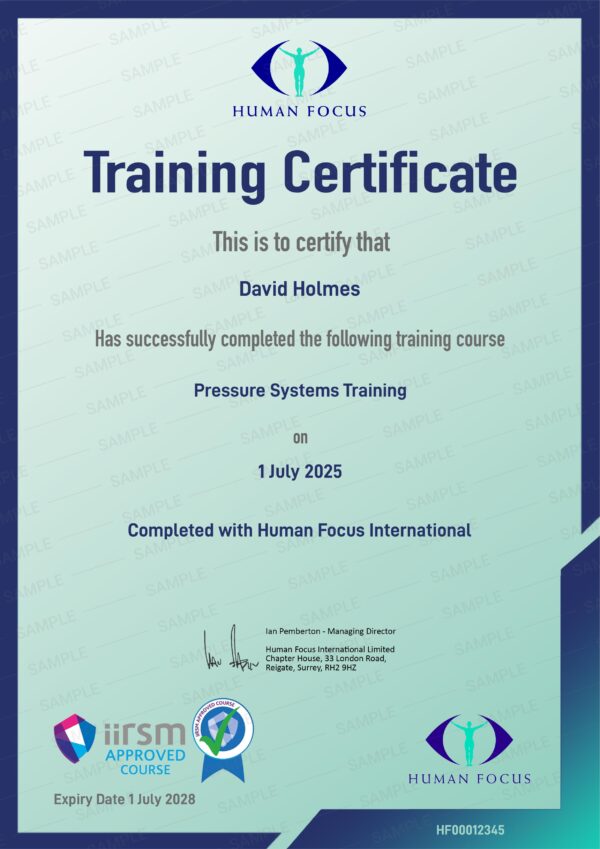
Pressure Systems Training Certificate
Pressure Systems Training
IIRSM-logo-for-website-131224
£25.00 +VAT

Discounts  for bulk purchases

Need Help?

£25.00 +VAT

Course Preview

Course Details

Course Duration 25+ minutes
Approval body IIRSM
Format Fully online
Assessment Multiple choice
Certification Same-day digital certificate
Certificate Valid For 3 years

Suitable For

Maintenance Engineers and Technicians

Laboratory and Plant Operatives

Boiler House and Utilities Staff

Facilities and Estates Supervisors

Health and Safety Support Staff

Production and Operations Team Members

Course Content

This course contains the following sections:

Introduces common pressure systems used in various industrial and commercial settings.

Examines real-world accidents to highlight the devastating impact of pressure system failures on people, property and operations.

Highlights the specific hazards presented by pressure systems used in different workplaces.

Outlines the factors that increase pressure system risk and the precautions needed to prevent failure.

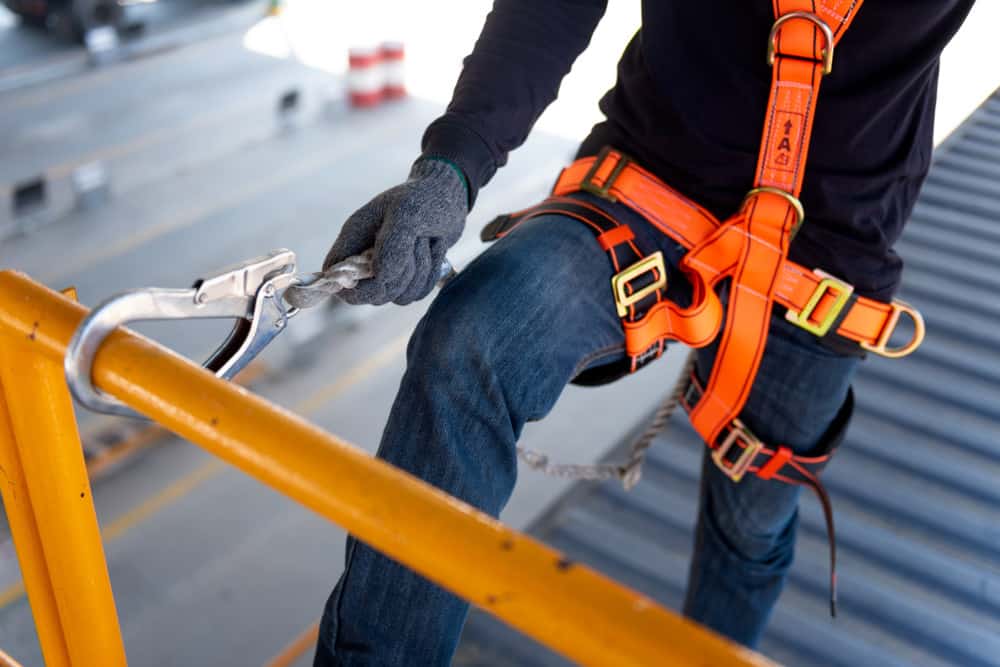
Explains the role of personal protective equipment (PPE) in reducing injury risks from leaks, hot surfaces and pressurised releases.

Underlines personal responsibilities when working around pressure systems, including checking equipment, reporting faults and wearing PPE.

What You Will Learn

Common pressure system types and where they are found

Hazards associated with different pressure systems and equipment

Risk factors that contribute to pressure system failures

Vital control measures that help prevent accidents and reduce harm

Frontline responsibilities in maintaining pressure system safety

Essential actions to take if equipment appears unsafe or faulty

Available in 13 Languages

Course subtitles are available in multiple languages, including:

French

Dutch

German

Italian

Spanish

Polish

Course Approval Body

IIRSM-logo-for-website-131224

Approved by IIRSM

This course is approved by the International Institute of Risk & Safety Management.

The course certificate includes:

  • User name
  • Company name
  • Course name
  • Completion date
  • Expiry date
  • Approval body

An IIRSM-approved certificate will be available for download and printing instantly upon course completion.

Users must complete an assessment before earning their certificate.

The end-of-course test is:

  • Fully online
  • Multiple choice

A score of 80% is required to pass.

Pressure Systems Training Certificate

Customer Feedback

Why is Pressure Systems Training Important?

Pressure systems are regulated under the Pressure Systems Safety Regulations 2000 (PSSR 2000), which require employers to control risks and prevent dangerous failures. This course supports compliance by building awareness among workers who operate or work near pressurised equipment.

Trainees gain a clear understanding of different pressure system types, where they are found, and the hazards they can present in the workplace. The course also outlines key responsibilities and safe behaviours expected of frontline workers, including their role in supporting system safety and regulatory compliance.

By understanding the risks and their responsibilities, trainees are better prepared to follow safe systems of work, use PPE consistently and respond appropriately to faults. The result is safer daily operation and stronger compliance with legal duties set out in PSSR 2000.

Related Courses