Falls from height are the leading cause of UK workplace fatalities. If your workplace isn’t following the working at height rules, you’re putting yourself and your team at risk.
As well as being crucial for safety reasons, obeying the rules for working at height is a legal requirement. Keep reading to learn what you need to know about staying safe and within the law when working at height.
What Is the Official Definition of Working at Height?
The official definition of working at height covers any work activities that are conducted ‘in any place where if there were no precautions in place, a person could fall a distance liable to cause personal injury,’ according to the Health and Safety Executive (HSE).
Examples of working at height include:
- Any work that is done while on a ladder, scaffold, or raised platform
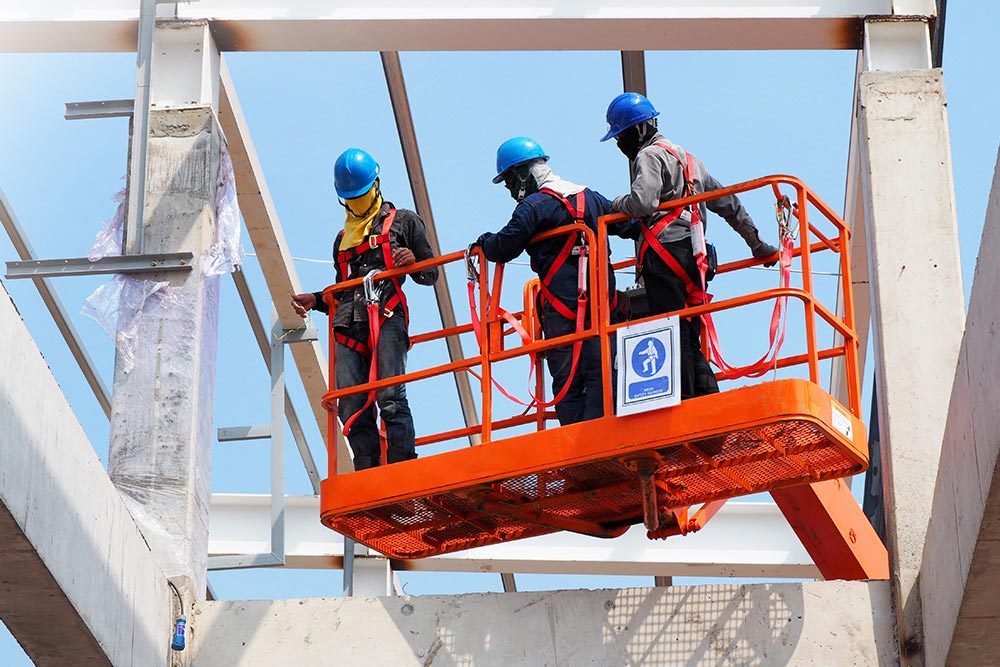
- Work done while using a mobile elevated platform (MEWP)
- Working on a flat or sloped roof
- Work where there is the risk of someone falling through a fragile surface
- Work where someone could fall through a floor opening or a hole in the ground.
Working at Height Training
Our Working at Height Training course explains the regulations, risks and safety measures of working above ground level. It provides employees and employers with awareness of their legal responsibilities and the necessary precautions to ensure work at height is safe.
What Laws Govern Working at Height?
The Work at Height Regulations 2005 (WAHR) contains the legal rules for working at height. If you’re not taking care to abide by the working at height rules laid out in the WAHR, you could face severe penalties.
A St. Albans-based construction company was found to be in breach of WAHR after an employee fell through a roof and broke two ribs and a hip in 2016. The firm was fined £30,000 by the HSE and made to pay additional court costs of over £2,000.
The Hazards of Working at Height
The hazards associated with working at height need to be understood and respected. Almost half of all the deaths in the construction industry in 2022 were because of falls from a height. 29 people died in the 2021 to 2022 period, according to HSE statistics.
While this number is far too high, it’s less than the number of people that died due to a fall from height before the rules for working at height were made law – 53 people were killed while working at height in 2004/5 and 68 died the previous year.
Common causes of working from height accidents are:
- Improperly conducted risk assessments
- Ladders being misused
- Improperly erected scaffolds
- Fragile roofing
- Lack of training
- Faulty fall prevention systems
- Degraded or defective safety harnesses
The Main Safety Rules for Working at Height
- Work from ground level wherever possible
- Carefully plan all working at height jobs
- Always use equipment that is safe, suitable for the task, and reliable
- Position airbags near the working area
- Ensure that all safety nets and harnesses have enough clearance
- Use all equipment according to the manufacturer’s instructions
- No objects should ever be tipped, dropped or thrown from a height
- Towers should be assembled and dismantled according to HSE and industry-approved methods
- Scaffolds must be positioned on firm and even ground
- Scaffolds should be secured by a supporting base plate and locking castors
- Work should not be attempted if there is strong wind, rain, or fog
- Broken equipment should not be used
- Ladders are to be used as a last resort. Scaffolding or platforms are preferable
- Work on ladders should last for no more than 30 minutes
- Loads taken up ladders should not exceed 10 kilograms
- All staff using ladders should maintain three points of contact at all times
- Never use the top three rungs of a ladder as a working position
- Never overreach when on a scaffold or platform or when using a ladder or MEWP
How to Comply with the Working at Height Regulations
While the WAHR is quite a large document with lots of detail, some essential rules must always be followed when working at height:
- If possible, always avoid the need to work from a height
- Always conduct a working at height risk assessment
- Put in place adequate control measures based on the risk assessment
- Make sure workers can safely travel to and from the work site
- Develop emergency evacuation and rescue procedures
- Provide adequate personal protective equipment (PPE)
- Check that all equipment is safe and in good working order
- All staff who are working at height must be competent to do so
- Anyone working at height must have proper supervision
- Any objects that could fall from a height must be secured
The Importance of Working at Height Risk Assessments
A risk assessment is one of the most important ways to ensure you comply with the rules for working at height. Before any work begins, a working at height risk assessment should be completed.
To properly conduct a working at height risk assessment, follow the five steps below:
- Identify all risks
- Determine who might be harmed and how they might be harmed
- Carefully evaluate the risks and put precautions in place
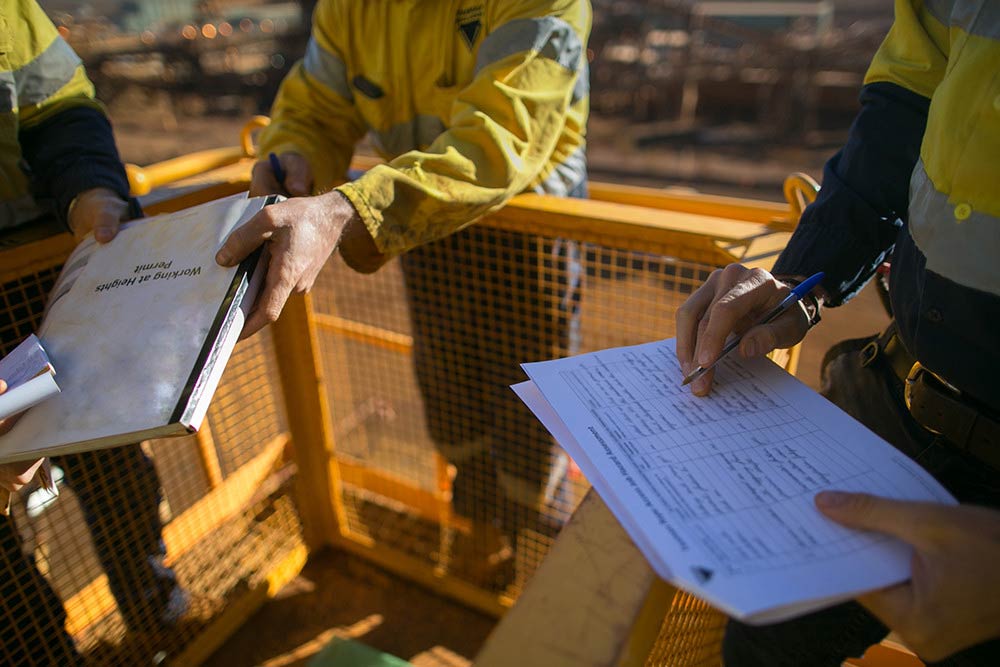
- Make a written record of the results
- Review your risk assessment and update it if needed
Why This Training is Important
The WAHR expressly states that ‘every employer shall ensure that no person engages in any activity, including organisation, planning and supervision, in relation to work at height or work equipment for use in such work unless he is competent to do so or, if being trained, is being supervised by a competent person.’ The HSE defines a competent person as someone with sufficient training and experience or knowledge.
Give your people access to relevant training to ensure that you meet your legal obligations under the WAHR. With proper training, your staff gain a good understanding of the rules for working at height to perform their tasks safely.
Our online working at height training course is ideal for any employer or self-employed person who wants to learn the working at height rules and how best to apply them.
Don’t let anyone in your team become a statistic because they don’t understand the working at height rules and haven’t followed best practices.